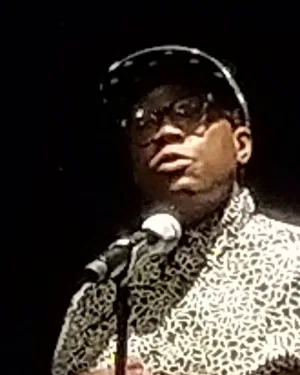
Cheryl Dunye
With “The Watermelon Woman” she became the first openly Black lesbian to direct a feature film – and invented a film history that should have existed.
Cheryl Dunye was born in Monrovia, Liberia, and grew up in Philadelphia. She first studied political theory, then realised that film could be a tool for political change and studied film at Temple University and Rutgers.
In the early 1990s she made a series of short films blending documentary and fiction, which she called “Dunyementaries”. In them she often played herself and told, with humour, of life as a young Black lesbian: of a teenage crush on a white classmate, of dating, of the different meanings of words in Black and white lesbian communities.
Her first feature film, “The Watermelon Woman” (1996), made her the first openly Black lesbian to direct a feature film. Dunye plays a young video-store clerk who searches for a forgotten Black actress of the 1930s, credited only as “The Watermelon Woman”, and discovers that she loved a white woman director. The archive photos and the actress are invented – Dunye created the history that film history had never recorded. The film is regarded as a landmark of independent and queer cinema.
She went on to direct the HBO film “Stranger Inside” (2001) about incarcerated Black women, the comedy “My Baby’s Daddy” (2004) and “The Owls” (2010), and episodes of series such as “Queen Sugar” and “Dear White People”. She has taught at many universities, received a Guggenheim Fellowship in 2016 and is a member of the Academy of Motion Picture Arts and Sciences.