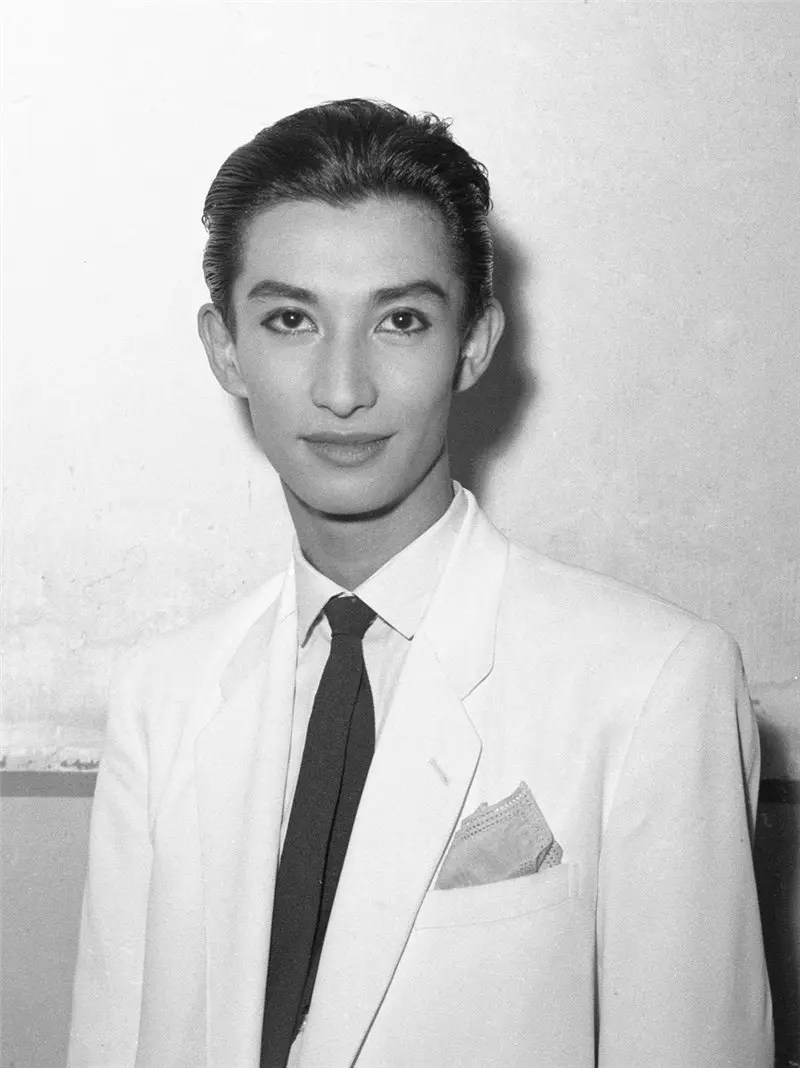
Akihiro Miwa
A survivor of the Nagasaki bombing, the singer and actor became a distinctive queer presence on Japan’s stages, on television and in Studio Ghibli films.
Akihiro Miwa was born in Nagasaki in 1935. At ten, he survived the atomic bombing of the city in August 1945. As a teenager, he moved to Tokyo and began singing in chanson cafés, including the Ginpari in Ginza.
His version of the French song “Mé Qué Mé Qué” became a hit in 1957. With striking clothes and an androgynous stage presence, he challenged expectations of how a male performer should look. He later wrote “Yoitomake no Uta”, released in 1965, drawing on the hard physical labour of a classmate's mother.
Miwa worked with writers and theatre-makers including Yukio Mishima and Shūji Terayama. He starred in stage and film versions of “Black Lizard”, adapted by Mishima from Edogawa Ranpo's novel. His voice reached a younger audience through Studio Ghibli: he played Moro in “Princess Mononoke” (1997) and the Witch of the Waste in “Howl's Moving Castle” (2004).
Openly gay, Miwa built a long career across music, theatre, books and television. His public presence made him one of Japan's most recognisable queer performers. He also spoke about his experience of the bombing and the need for peace.
Miwa died on 20 June 2026, aged 91.