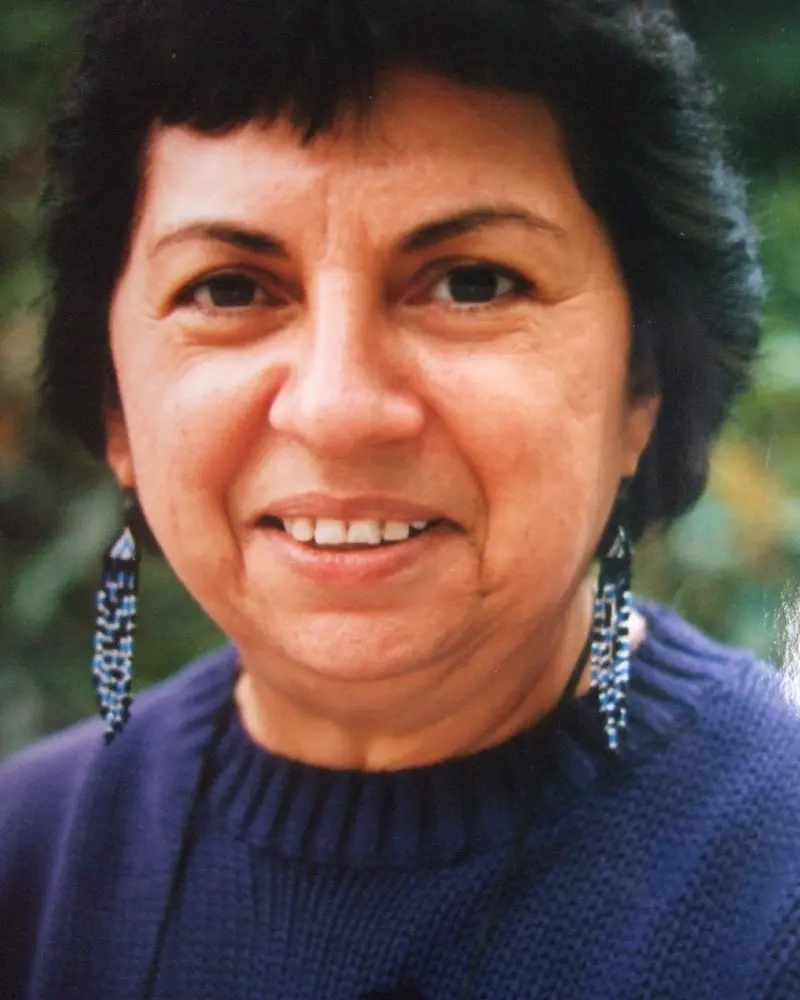
- Born
- 26 September 1942Rio Grande Valley, Texas, USA
- Died
- 15 May 2004Santa Cruz, California, USA · aged 61
Gloria Anzaldúa
A Chicana writer whose work made the border a way of thinking about language, identity and power.
Gloria Anzaldúa was born in the Rio Grande Valley of Texas in 1942. She grew up in a Mexican American farmworking family and worked in the fields as a child. Education took her into teaching and eventually towards a life devoted to writing and intellectual work.
After moving to California in 1977, she joined feminist networks while challenging the exclusions within them. With Cherríe Moraga she edited “This Bridge Called My Back: Writings by Radical Women of Color” (1981), bringing race, class and sexuality into conversations that often treated women’s experience as uniform.
In “Borderlands/La Frontera: The New Mestiza” (1987), poetry, memoir and argument move between languages. The US–Mexico border becomes both a physical place and a way of understanding life across cultures and conflicting expectations.
Writing as a lesbian and a Chicana, Anzaldúa explored identities that did not fit comfortably into established categories. Her work influenced feminist thought, queer theory and Chicana studies. She died in 2004, aged 61, from complications of diabetes. UC Santa Cruz, where she had been working towards a doctorate, awarded the degree posthumously.