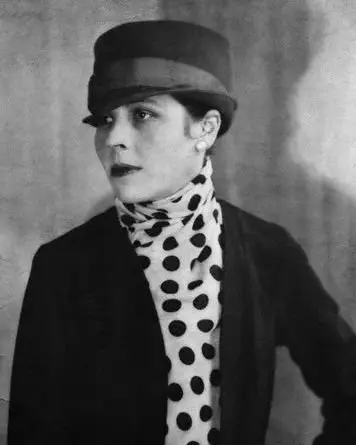
- Born
- 12 June 1892Cornwall-on-Hudson, New York, USA
- Died
- 18 June 1982New York City, USA · aged 90
Djuna Barnes
Her journalism, drawings and modernist fiction culminated in “Nightwood”, a searching novel of desire and loss.
Djuna Barnes was born in Cornwall-on-Hudson, New York, in 1892. After an unconventional childhood, she studied art and began working as a newspaper journalist and illustrator in 1913. Her assignments could be confrontational: she underwent force-feeding to report on the treatment of imprisoned suffragettes.
In 1921 she moved to Paris and entered its expatriate literary world. “Ladies Almanack” (1928) playfully reimagined the women associated with Natalie Clifford Barney’s salon. Barnes’s relationship with artist Thelma Wood became a central experience of those years.
The pain of that relationship informed “Nightwood” (1936), a novel whose dense language and unsettled characters place it among major works of literary modernism. T. S. Eliot’s introduction helped establish its reputation, while later readers made it an important text in lesbian and queer literary history.
Barnes resisted reducing her writing or her attachments to a single identity label. From 1940 she lived largely in seclusion in Greenwich Village, continuing to work but publishing relatively little. She died in New York in 1982, aged 90. Her archive preserves a creative life extending well beyond the novel for which she is best known.